SaaS isn't Dying, it's Just Losing it's Head

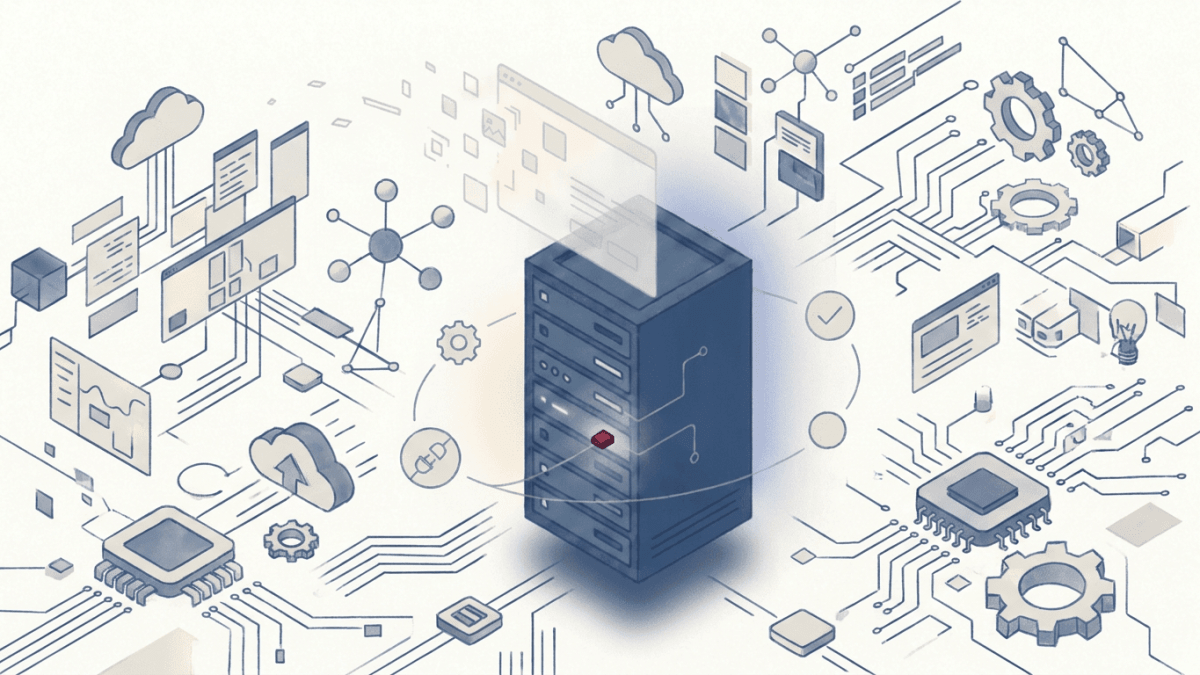
AI torched $2 trillion in market cap from the tech sector earlier this year. People are calling it the dawn of the “SaaS-pocalypse.”
“SaaS is dead. AI killed it. Don’t even try to build it,” they say (very eloquently, I might add).
Makes sense. Every new Anthropic feature release takes out the kneecaps of public companies. Personal agents like OpenClaw are operating like people online. Your next door neighbor is probably building some bespoke app with Claude Code or Codex.
Half the internet is already writing eulogies for SaaS.
Turns out, we’ve seen this before. SaaS isn’t dying, it’s just democratizing (again).
And luckily for you, humans are still too lazy to do anything about it.
AI is killing your UI
Every major shift in software hasn’t killed software. It’s just changed how people accessed it and how companies delivered it.
Before the cloud, launching a software company required physical distribution (remember floppy disks and CDs?). Only organizations with serious budgets could play. Then cloud hosting and the mobile revolution kicked off a massive explosion in SaaS, freeing entrepreneurs from needing to physically acquire hardware and dramatically expanding who could build and sell software.
And right now, there is another shift: AI agents are killing the user interface (UI). You know, those dashboards, drag-and-drop builders, and 47-click workflows that require a certification to operate.
And honestly? Good. Most SaaS interfaces are bad. They exist because humans needed a visual way to interact with underlying systems, not because the interface itself was valuable.
But in the near future, humans will likely never see your SaaS app. Instead, they’ll have personal AI agents that interface with your software, reading and writing to and from it like a real-life user would.
What’s really happening isn’t the death of SaaS. It’s the death of the access layer. The way people use your product, and the way you deliver it to the end-user.
The ones who’ll not only survive, but thrive, are the ones who build for this headless future.
The Headless Future
The winning SaaS companies in five years won’t be the ones with the prettiest interfaces or the most intuitive workflows. They’ll be the ones with the best APIs and integrations (aka, the ones that make it easy for AI agents like Claude Cowork to access on behalf of their users).
The move is what people are calling headless SaaS, which is software that has completely divorced its back-end logic from the front-end user interface.
Software that doesn’t care whether a human or an agent is using it. Software that exposes its capabilities through clean APIs so that any interface, whether it’s a dashboard, an OpenClaw agent, or Claude running autonomously at 3 AM, can plug in and get work done on behalf of the user.
So, if you’re building tech products today, don’t assume SaaS is dead and go down some random AI agent rabbit hole because it sounds like the smart thing to do.
Instead, build your SaaS for the headless future where AI agents will be the ones accessing it instead of your user. A good heuristic I use: What if my users only accessed my app through Claude Cowork? That will help you build toward this future.
But, that doesn’t mean that any SaaS business will succeed in this headless future. It’s also important you pick the right product to build, and the more specialized the better.
The SaaS Products That Will Survive Without a Head
Not every SaaS business makes it through this. The more specialized your product, the better your odds. And if that specialization comes from knowledge and expertise nobody else has, you’re holding an unfair advantage that no bespoke agent can easily replicate.
So, which products are doomed?
The ones that do basic data management and retrieval. Things like CRMs, calendar planning apps, and metrics dashboards, to name a few. The kind of tools that mostly move data from one place to another and show it back to you.
If a user can spin up something close enough in an afternoon with Claude Cowork, why would they pay you for it? These tools die first.
What survives is the opposite: specialized tools that take too much time, effort, and expertise for someone to build themselves.
Sure, you could build your own real estate investing app or agent. But a domain expert’s product encodes years of real deals, hard-won mistakes, and judgment you can’t vibe-code in a weekend. Why spend months building that when you could plug right into the thing the expert already built using a personal AI agent?
That’s exactly how I think about Flyletter, the AI newsletter writing platform that drafts every issue in your brand voice.
Someone could create a Claude skill to write their newsletter, sure. But it will never be as good as the 10 years I’ve spent operating newsletters and translating that experience into an agentic workflow that does it all for you. Probably better to pay for access than to spend years building it yourself.
That’s the moat. Not the interface, not the data plumbing. The expertise you’ve packaged into something an agent can plug into.
What This Means If You’re Building Right Now
The heuristic I keep coming back to is this: What if my customers never saw my product? What if their agent interacted with it on their behalf? What if the only interface was an API call from Claude or whatever agent they’re using?
If your product still delivers value in that scenario, you’re building the right infrastructure. If your product only delivers value through its interface, you’re competing with agents. And agents are getting better every month.
A good place to start is building a custom Claude MCP connector for your product. If users would rather pay for your SaaS and access it through a Claude connector rather than building it themselves with some elbow grease and a database like Notion, then you’ve got a winner.
API-first companies are growing 2.4x faster than product-first peers right now. That gap is only going to widen. Don’t get left behind.

Writer, founder, and AI builder. Currently building Flyletter, previously sold Selling Signals (100k subscribers). 1 sold, 2 failed, 1 active. This post started as an issue of my weekly newsletter.