Your Margins Are Showing

A viral post on Threads asked why 97% of vibe coded websites look the same. I replied with a screenshot of mine, sure I'd get compliments.
People trashed it within the hour.
I'm not a designer. I'm a writer, and writing is how I think and communicate best. So when I built the website for Flyletter, I vibe coded it using live sites as my reference, and thought the result was great. Guess I was wrong.
I prickled at the responses. My first instinct was to troll them right back. I wanted to fire off a few snarky replies and add a little more negativity to the internet, which would've made me feel better for a grand total of ten minutes.
I didn't. I swallowed my ego and took their feedback to fix the site. The results speak for themselves. It not only looks better, but converts better, too, and one of the people who roasted me is now a designer in my network.
Let's walk through exactly what happened (including the crippling burns) and what it taught me about putting your work out there, filtering the noise, taking feedback well, and actually improving from it.
How I Got Roasted
The post went up and pulled 630 likes and 111 replies. The designers in the replies kept blaming the same two things, Tailwind and default styling.
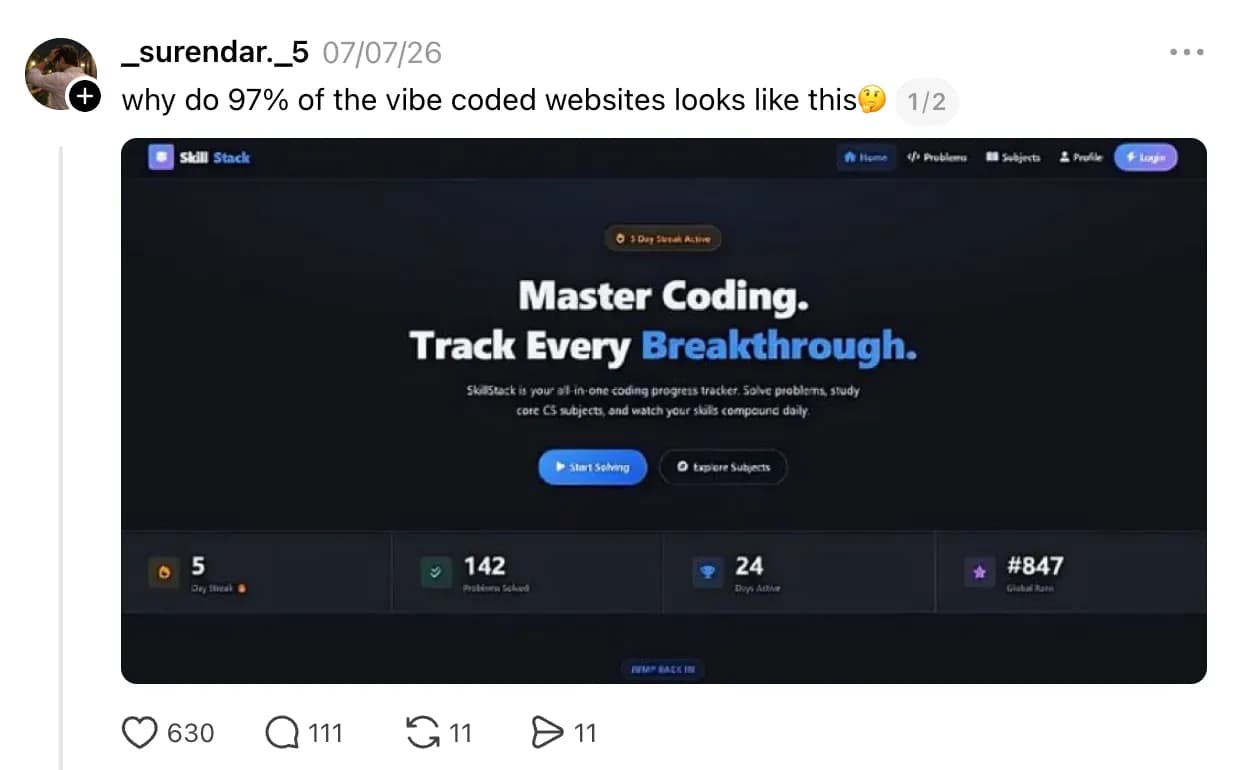
My site used Tailwind too. But I'd built it from sites I admired, so I figured mine was the exception. I replied with a screenshot and a little swagger (lol).
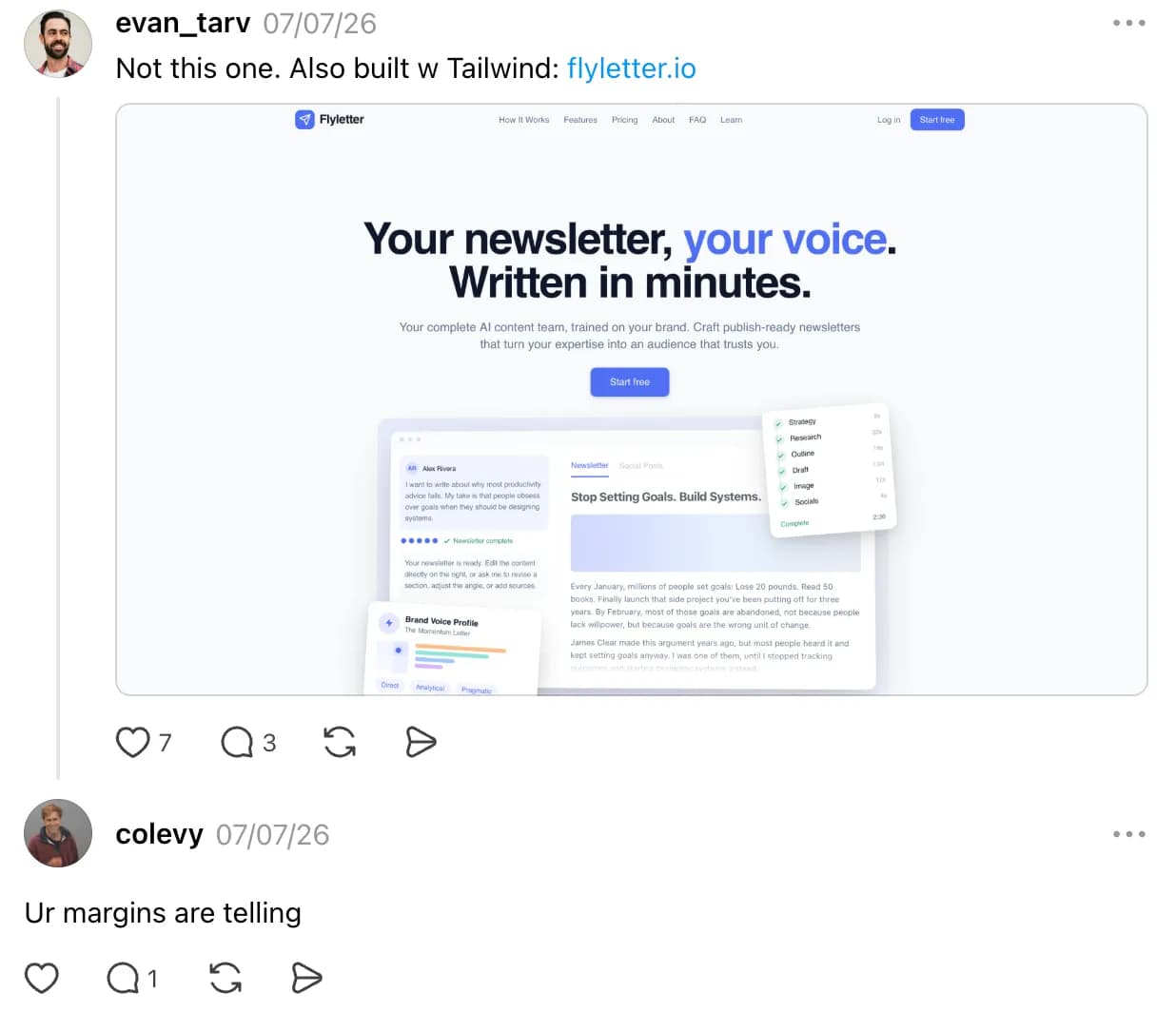
The replies came fast. One person said there was no difference and told me to switch my background to black and look again (accurate). Another answered with the "They're the same picture" GIF from The Office (sic burn). A third kept it to four words.
"Ur margins are telling."
It stung because I'd picked every reference myself and believed the site was good. They saw at a glance what I couldn't see at all.
Over time, I've learned not to be reactive. So I held off on firing back, sat with it, swallowed my pride, and decided to actually use what they said.
What Happened When I Listened
I literally gave Claude the whole thread. Then I asked it to do its own audit of my site and tell me what to improve, and I kept vibe coding from there.
It was the same tool I'd used to build the original. This time it had a thread full of designers pointing at exactly what was wrong.
Three days later, I went back to the thread with the new version.
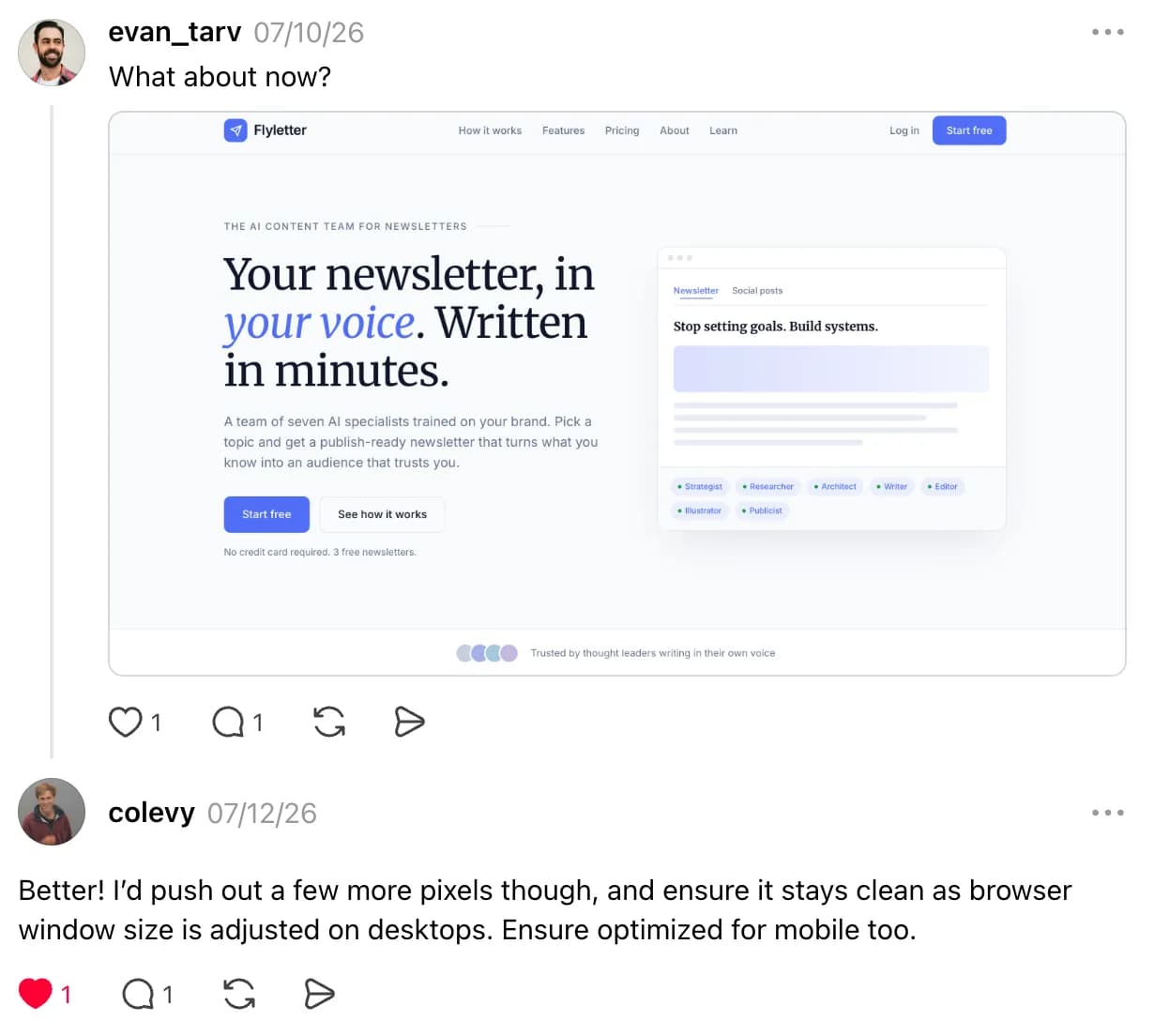
The feedback changed. The haters came back with kinder words and even more feedback. A few more pixels of breathing room here, a responsive layout there, and the website was better.
It also gets more traffic and converts better, since I was able to re-optimize for SEO and on-site behavior while making the design changes.
I thanked the thread with a hearty, "Appreciate it! Looks much better already, glad I got roasted lol." One of the designers followed me, and I followed him back. Now I have an open line to someone whose taste I trust, which is a pretty good return on getting roasted.
What Getting Roasted Taught Me
I took four things away from my public roast, and they apply to anything you build.
Put your work out there
If I'd never posted that screenshot, or had no online presence at all, my site would still look like everyone else's. And I'd have no idea.
Especially when you're building alone, nobody at the next desk tells you the margins are off. You're the builder, the designer, and the QA team, and you carry the same blind spots into all three jobs. Crowdsourcing feedback is one of the quickest ways to learn.
You don't even need an audience of your own to get feedback. I borrowed one. I replied inside a thread that already had 630 likes and a reply section full of designers.
Find the place where people are already talking about your thing, and engage in the conversation.
Apply a filter
Some people online are just negative. They'll shitpost you no matter what you show them, and their comments say more about them than about you.
Before you take anything to heart, decide whether it's feedback at all. I ask myself three quick questions:
- Is it about the work or about you?
- Could you act on it?
- Are other people saying the same thing?
The comments on my site passed all three. They were about the site, they pointed at things I could fix, and several people were saying some version of the same thing.
Anything that fails the test, you can let go (muting is free).
Swallow your pride
Once a comment passes the filter, the hard part is your ego.
If a comment makes you angry, that anger is usually a mirror. The comment hit a nerve, which means there's likely some truth to it. I was proud of my new business venture and the shiny website I made myself. That pride made me quick to discredit the feedback.
But turns out, the replies I wanted to fight were the ones I needed to see.
Nobody wants to hear their baby is ugly, but swallow your pride. You can't build something successful without improving, and you can't improve without taking feedback.
The next time a comment stings, treat it as a reason to dig in.
Improve, then go back
Feedback does nothing until you act on it.
The easiest move is to hand it to AI. Paste the conversation into Claude, ask it for an audit, and work through the list it gives you. You can keep the ask simple, something like this:
Strangers left this feedback on my site. Audit the site yourself, tell me what you'd change, and rank the fixes by impact.
Then go back with the upgrade. Show the people who gave you feedback what you changed, and thank them publicly. That's what turned my roasts into a "Better!", a second round of notes, and a mutual follow from a designer.
Bottom Line
I couldn't see what was wrong with my own site. Strangers with more expertise than me could, and it took me one reply to find them.
Put your work out there, filter the noise, take it well, and improve. What are you building right now that you haven't shown anyone yet?

Writer, founder, and AI builder. Currently building Flyletter, previously sold Selling Signals (100k+ subscribers). 1 sold, 2 failed, 1 active. This post started as an issue of my weekly newsletter.